
Có thể bạn quan tâm: Một Số Phong Tục Tập Quán: Nét Văn Hóa Truyền Thống Trong Đời Sống Hiện Đại
Introduction
When travelers consider a journey between Myanmar (formerly Burma) and Vietnam, one of the first questions that arises is how long the trip will take. The phrase “myanmar cách việt nam mấy tiếng” translates to “Myanmar is how many hours from Vietnam?” This seemingly simple query opens up a multifaceted discussion involving geography, transportation options, border regulations, time zones, and cultural considerations. In this article, we will explore the various routes available, the factors influencing travel time, and provide a detailed breakdown of the estimated durations for each mode of transport. By the end, readers will have a clear understanding of the time commitment required for a Myanmar‑to‑Vietnam journey, whether by air, land, or sea.
Có thể bạn quan tâm: Nem Nướng Nha Trang Ngon Ở Sài Gòn: Cẩm Nang Chọn Quán, Dọn Món Và Ăn Đúng Khẩu Vị
Geographic Overview
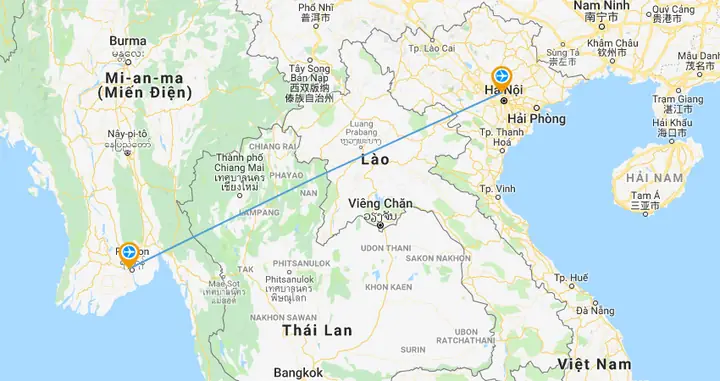
Myanmar and Vietnam share a relatively short border, primarily defined by the Mekong River and the mountainous terrain of the Annamite Range. The two countries are separated by a narrow strip of land that includes the Lao People’s Democratic Republic, creating a tri‑border area where Myanmar, Laos, and Vietnam meet. The total distance between major cities such as Yangon (Myanmar) and Hanoi (Vietnam) is approximately 1,200 kilometers (745 miles) as the crow flies. However, the actual travel distance can vary significantly depending on the chosen route, mode of transport, and the specific entry and exit points.
Có thể bạn quan tâm: Mâm Cơm Cúng 3 Ngày Tết: Gìn Giữ Nét Đẹp Của Người Việt
Time Zones and Their Impact
Both Myanmar and Vietnam operate on a single time zone, but there is a subtle difference: Myanmar Standard Time (MST) is UTC+6:30, while Vietnam Standard Time (VST) is UTC+7:00. This half‑hour discrepancy means that when it is 12:00 noon in Yangon, it is already 12:30 in Hanoi. Although the difference is minor, it can affect scheduling, especially for connecting flights or coordinated ground transportation. Travelers should adjust their watches accordingly to avoid confusion, particularly when crossing the border where local officials may operate on either time standard.
Air Travel: The Fastest Option
Direct Flights
As of 2024, there are no regularly scheduled direct commercial flights connecting major Myanmar cities to major Vietnamese cities. The absence of direct routes is primarily due to limited airline infrastructure, political considerations, and relatively low passenger demand. Consequently, most air travelers must endure at least one stopover.
One‑Stop Flights
The most common one‑stop itineraries involve transit through Bangkok (Thailand), Kuala Lumpur (Malaysia), or Singapore. A typical itinerary might look like:
- Yangon (RGN) → Bangkok (BKK) → Hanoi (HAN)
- Yangon (RGN) → Kuala Lumpur (KUL) → Ho Chi Minh City (SGN)
Each leg of the journey contributes to the total travel time. For example:
- Yangon to Bangkok: Approximately 1 hour 30 minutes.
- Layover in Bangkok: Usually 2 to 4 hours, depending on the airline and connection.
- Bangkok to Hanoi: Roughly 2 hours.
Thus, the total flight time, including layover, can range from 5 to 7 hours. Adding airport procedures such as check‑in, security, and immigration can extend the overall door‑to‑door time to 8‑10 hours.
Alternative Air Routes
Some travelers opt for flights via Chiang Mai (Thailand) or Phnom Penh (Cambodia). These routes may involve longer flight times but can sometimes offer more favorable schedules or lower fares. For instance:
- Yangon → Chiang Mai → Hanoi: 1h 15m + 2h 30m + layover ≈ 6‑8 hours total.
- Yangon → Phnom Penh → Ho Chi Minh City: 1h 10m + 1h 45m + layover ≈ 5‑7 hours total.
Factors Influencing Flight Duration
- Aircraft Type: Larger wide‑body aircraft may have longer take‑off and landing times, but they often cruise at higher speeds.
- Weather Conditions: Monsoon season (June‑September) can cause delays or longer flight paths due to turbulence.
- Air Traffic Control (ATC): Congestion at major hubs like Bangkok or Singapore can increase taxiing time.
Land Travel: Overland Crossings
Driving Distance and Time
Travelers who prefer a road trip can drive from Myanmar to Vietnam, though the journey is complex due to border formalities, road conditions, and the need to traverse Laos. The most common overland route is:
Yangon → Mandalay → Lashio → Muse → Boten (Laos) → Luang Prabang → Vientiane → Thanaleng → Nong Khai (Thailand) → Udon Thani → Bangkok → Aranyaprathet → Poipet → Siem Reap → Phnom Penh → Moc Bai → Ho Chi Minh City
The total driving distance exceeds 2,500 kilometers (1,550 miles). Under optimal conditions, driving continuously (without stops) would take approximately 30‑35 hours, spread over 2‑3 days. However, realistic travel time includes:
- Border Crossings: Each border (Myanmar‑Laos, Laos‑Thailand, Thailand‑Cambodia, Cambodia‑Vietnam) requires passport checks, visa procedures, and possible vehicle inspections, each adding 30 minutes to 2 hours.
- Road Quality: While major highways in Thailand and Vietnam are well‑paved, sections in Laos and Myanmar may be unpaved or under construction, reducing average speed to 30‑50 km/h.
- Rest and Fuel Stops: Drivers typically need to stop for meals, fuel, and rest, extending the total duration to 4‑5 days.
Bus and Coach Services
Có thể bạn quan tâm: Nem Nướng Nha Trang Ý Thiên: Sức Hút Của Mùi Nướng Và Vị Cuối Cùng Khó Quên
Several bus companies operate cross‑border services, especially between major cities. For example:
- Yangon to Bangkok: Direct buses depart daily, taking about 30‑36 hours, including a stop at the Myanmar‑Thai border for immigration.
- Bangkok to Ho Chi Minh City: Buses run via Aranyaprathet and Poipet, with total travel times of 24‑30 hours.
These services often include a driver change and a night segment, making the journey more comfortable for some travelers.
Motorcycle or Bicycle
Adventurous travelers may choose to traverse the region by motorcycle or bicycle. This mode offers flexibility but demands careful planning regarding fuel, accommodation, and border documentation. The average speed for a motorcycle on mixed roads is around 40 km/h, leading to a total travel time of 60‑80 hours over 5‑7 days, assuming 8‑10 hours of riding per day.
Sea Travel: River and Maritime Routes
Mekong River Cruise
The Mekong River serves as a natural waterway linking Myanmar, Laos, Thailand, Cambodia, and Vietnam. Cruise operators offer multi‑day itineraries that include stops at various ports. A typical cruise from Yangon to Ho Chi Minh City might involve:
- Yangon to Mandalay (by river or overland transfer)
- Mandalay to Lashio (river segment)
- Lashio to Boten (overland)
- Boten to Luang Prabab (river)
- Luang Prabang to Vientiane (river)
- Vientiane to Phnom Penh (river)
- Phnom Penh to Ho Chi Minh City (river)
The entire journey can take 7‑10 days, depending on the cruise line, itinerary, and stops. While not the fastest, it offers a unique perspective on the region’s geography and culture.
Ferry Services
Limited ferry services exist between coastal cities. For instance, a ferry from Yangon to Phuket (Thailand) followed by a bus to Ho Chi Minh City can be arranged, but this route is less common and often more expensive than air travel.
Border Crossing Procedures
Regardless of the mode of transport, crossing the Myanmar‑Vietnam border involves several steps:
- Visa Requirements: Most travelers need a visa for both Myanmar and Vietnam. Some nationalities are eligible for e‑Visa or visa‑on‑arrival, but prior application is advisable.
- Passport Control: At each border, passports are stamped, and entry/exit cards are filled out.
- Customs Declaration: Vehicles, luggage, and personal items must be declared. Certain goods (e.g., alcohol, tobacco) are subject to duties.
- Health Checks: In the wake of global health events, temperature screening or health declarations may be required.
These procedures can add 30 minutes to 2 hours per crossing, depending on the volume of travelers and the efficiency of the border officials.
Comparative Summary of Travel Times
| Mode of Transport | Approximate Total Time (including formalities) | Typical Duration |
|---|---|---|
| Air (one‑stop) | 8‑10 hours | 5‑7 hours flight + 2‑3 hours airport |
| Overland (car) | 2‑3 days driving + 1‑2 days for border stops | 4‑5 days total |
| Bus | 30‑36 hours | 1‑2 days |
| Motorcycle/Bicycle | 5‑7 days | 5‑7 days |
| River Cruise | 7‑10 days | 7‑10 days |
Factors Affecting Travel Time
- Seasonal Weather: The monsoon season can cause flooding, road closures, and flight delays.
- Political Stability: Protests, civil unrest, or changes in diplomatic relations may lead to temporary border closures.
- Infrastructure Development: New highways, bridges, or airports can reduce travel time over the years.
- Holiday Periods: Peak travel seasons (e.g., Tet in Vietnam, Thingyan in Myanmar) can increase congestion at borders and airports.
Practical Tips for Travelers
- Plan Ahead: Book flights or bus tickets well in advance, especially during holidays.
- Visa Preparation: Ensure both Myanmar and Vietnam visas are obtained before departure.
- Travel Insurance: Consider insurance that covers trip cancellations, medical emergencies, and loss of belongings.
- Currency Exchange: Carry a mix of cash (USD, Myanmar Kyat, Vietnamese Dong) and inform your bank of your travel plans.
- Health Precautions: Vaccinations for hepatitis, typhoid, and malaria may be recommended depending on the regions visited.
Cultural Considerations
Understanding local customs can enhance the travel experience. In Myanmar, respectful dress (covering shoulders and knees) is expected at religious sites. In Vietnam, removing shoes before entering homes and temples is customary. Learning a few basic phrases in Burmese and Vietnamese can also facilitate smoother interactions.
Future Outlook
Regional integration initiatives, such as the Greater Mekong Subregion (GMS) program, aim to improve transportation infrastructure, streamline border procedures, and promote tourism. Proposed projects include:
- High‑Speed Rail: A potential rail link connecting Yangon, Mandalay, and Hanoi could reduce travel time to under 24 hours.
- Airport Expansion: Upgrades to Yangon International Airport and Noi Bai International Airport may enable more direct flights.
- Digital Visa Systems: Implementation of e‑visa platforms could shorten processing times.
If these developments materialize, the journey from Myanmar to Vietnam could become significantly faster and more convenient.
Conclusion
The question “Myanmar is how many hours from Vietnam?” does not have a single answer, as it depends on the chosen mode of transport, route, and external factors. Air travel, while the fastest, typically requires 8‑10 hours door‑to‑door due to layovers. Overland journeys can span several days, offering a more immersive experience but demanding more time and preparation. Sea travel via the Mekong River provides a leisurely alternative, taking a week or more. By understanding the various options and their associated time commitments, travelers can make informed decisions that align with their schedules, budgets, and interests. As infrastructure improves and regional cooperation deepens, the future may bring even more efficient connections between these two vibrant nations.