
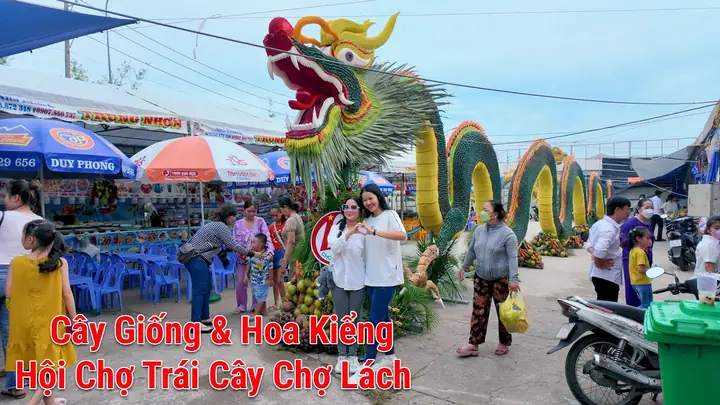
Tucked away in the heart of the Mekong Delta, Ben Tre province is often hailed as the “land of coconuts.” Yet, nestled within this verdant province lies Cho Lach district, a hidden gem renowned not for coconuts, but for its dazzling array of tropical fruits and, most notably, its centuries-old tradition of bonsai and ornamental flower cultivation. Every year, the Hội chợ trái cây Chợ Lách (Cho Lach Fruit Festival) bursts onto the scene, transforming this quiet rural district into a vibrant epicenter of agricultural exchange, cultural celebration, and economic aspiration. More than just a market fair, this festival is a powerful testament to the resilience, creativity, and ambition of the Mekong Delta’s farmers, showcasing the unique “terroir” of the region while striving to build sustainable brand values for Vietnamese fruits on the global map.
Có thể bạn quan tâm: Hồ Kênh Hạ Galina Nha Trang: Thiên Đường Ẩn Mình Giữa Thành Phố Biển, Điểm Check-in “sống Ảo” Không Thể Bỏ Lỡ
Lịch Sử Hình Thành: Từ Phiên Chợ Truyền Thống Đến Sự Kiện Quốc Gia
The roots of the Cho Lach Fruit Festival run deep, intertwined with the very history of the district’s agricultural development. Cho Lach has long been famous for its “cây ăn quả” (fruit trees) and “cây cảnh” (ornamental plants). Generations of farmers here have honed the art of grafting, dwarfing, and shaping trees, creating a unique agricultural identity distinct from the rice-intensive plains elsewhere in the Delta.
Có thể bạn quan tâm: Công Viên Nước Hồ Tây Ở Đâu? Hướng Dẫn Chi Tiết Địa Chỉ, Giá Vé, Lịch Mở Cửa Và Trải Nghiệm Toàn Diện 2024
Historically, the end of the lunar year and the early months of the new year (Tet holiday) saw a bustling trade in ornamental plants – kumquats, peach blossoms, and especially the intricate bonsai trees that Cho Lach artisans are famous for. Farmers would bring their best specimens to the local wharves and communal yards to trade. This spontaneous seasonal trading gradually evolved into organized fairs.
Có thể bạn quan tâm: Nhà Nghỉ Trí Đức Vũng Tàu: Địa Chỉ Nghỉ Dưỡng Lý Tưởng, Gần Biển, Giá Hời, Phục Vụ Tận Tâm
Recognizing the potential to promote this unique agricultural strength, the Ben Tre Provincial People’s Committee officially organized the first large-scale Cho Lach Fruit Festival in 2003 (often associated with the Southern Fruit Festival rotation or as a standalone district-level event elevated to provincial significance). Since then, it has become a biennial or annual fixture (depending on the year and coordination with the Southern Fruit Festival), usually taking place around June to July – the peak harvest season for the region’s most prized fruits: durian, mangosteen, rambutan, longan, and mango.
The festival’s evolution mirrors the transformation of Cho Lach agriculture itself: from small-scale, spontaneous household gardening to concentrated, high-tech farming areas meeting VietGAP and GlobalGAP standards. It has grown from a local trade promotion event into a key cultural tourism product of Ben Tre province, attracting hundreds of thousands of visitors from across Vietnam and international delegates.
Không Gian Triển Lãm: Bản Giao Hưởng Của Tự Nhiên Và Con Người
Stepping into the festival grounds – typically centered around the Cho Lach District Sports Center or the sprawling yards along the Ba Lai River – visitors are immediately enveloped in a sensory overload of colors, scents, and sounds. The layout is meticulously planned to serve multiple functions: exhibition, trade, competition, and cultural experience.
1. Khu Trưng Bày Và Giới Thiệu Sản Phẩm Nông Nghiệp (The Core Exhibition Area)
This is the beating heart of the festival. Here, the “Four Musketeers” of Cho Lach fruits take center stage:
Sầu Riêng (Durian): Specifically the Ri6 and Monthong varieties. Cho Lach durian is famous for its thick, golden-yellow flesh, small seeds, rich sweetness, and distinct aroma that is strong but not overpowering. The festival displays whole fruits, cut samples for tasting, and processed products like durian chips, dried durian, and durian paste.
Măng Cụt (Mangosteen): The “Queen of Fruits.” Cho Lach mangosteen boasts a deep purple rind, snow-white segments, perfect balance of sweet and sour, and high yield. It is a star export product to demanding markets like the US, Australia, and China.
Chôm Chôm (Rambutan): The “Java” or “Thai” varieties grown here have thick, crisp, sweet flesh that separates easily from the seed. The bright red/yellow spiky skins create a stunning visual display.
Nhãn (Longan): Notably the “Nhãn Lồng” variety – large, thick pulp, small seed, intensely sweet.
Beyond the big four, the exhibition boasts an incredible biodiversity: Xoài Cát Hòa Lộc (Hoa Loc mango – fragrant, fiberless, buttery), Vải Thiều (Lychee), Long Nhãn, Mít (Jackfruit), Soursop (Mãng Cầu), Dragon Fruit (Thanh Long), and a plethora of lesser-known indigenous fruits like Bứa (Pomelo), Ổi (Guava), Mít Nang, and Trái Bơ (Avocado).
Crucially, this area doesn’t just show fresh fruit. It highlights the value chain: seedlings from high-tech nurseries (Cho Lach is the largest seedling supplier in the Mekong Delta), organic fertilizers, biological pesticides, drip irrigation systems, post-harvest processing technology (cold storage, vacuum frying, freeze-drying), and packaging designs. It connects the farmer to the scientist, the processor, and the exporter.
2. Khu Cây Cảnh, Bonsai Và Hoa Đà Quỳ – Dấu Ấn “Thương Hiệu” Chợ Lách
If fruits are the “body,” then ornamental plants and bonsai are the “soul” of Cho Lach agriculture. This section is a living art gallery. Rows of Cây Cối Xay (Kumquat) heavy with golden fruit (symbolizing prosperity), Mai Vàng (Ochna integerrima) bonsai with gnarled ancient trunks blooming brilliant yellow, Hồng Khôi, Bồng Lai, Trúc Phú Quý shaped into dragons, phoenixes, or abstract philosophical forms.
The Bonsai Competition is a highlight. Artisans from across the South converge to display masterpieces nurtured for decades. The judging criteria go beyond aesthetics: root spread (nebari), trunk taper, branch structure (ramification), pot harmony, and the “spirit” (khí phách) of the tree. This competition elevates the status of the farmer-artisan, recognizing their patience and artistic vision. It also serves as a marketplace where high-value bonsai change hands for hundreds of millions, even billions of VND.
3. Khu Chương Trình “Một Sản Phẩm communes” (OCOP) Và Nông Nghiệp Thông Minh
Reflecting the national OCOP (One Commune One Product) program, this zone showcases the processed brilliance of Cho Lach. Stalls from every commune present their star OCOP products:
Durian cake, durian wine, durian ice cream.
Mangosteen tea, mangosteen perfume, mangosteen rind extract.
Coconut nectar sugar, coconut jam, coconut fiber handicrafts (leveraging Ben Tre’s coconut heritage).
Seedless lime (Chanh không hạt) products – essential oils, juice, marmalade.
Rice paper (Bánh tráng), noodles (Hủ tiếu), fermented fish sauce (Nước mắm).
The “Smart Agriculture” corner demonstrates IoT applications: sensors monitoring soil moisture, nutrient levels, and weather, automatically controlling irrigation and fertilization via smartphone apps. Drones for spraying pesticides and pollinating durian flowers (a critical innovation given the labor shortage and height of trees) are demonstrated live. This signals Cho Lach’s pivot from “agricultural production” to “agricultural economy.”
Các Hoạt Động Đáng Chú Ý: Kết Nối, Chia Sẻ Và Vươn Tầm
The festival is far from a static display. Its dynamism lies in a packed schedule of activities designed to foster connection and knowledge transfer.
1. Hội Chợ Thương Mại & Kết Nối Cung – Cầu (Trade Fair & B2B Matchmaking)
This is the pragmatic core. The organizers invite major domestic supermarket chains (Co.opmart, Big C, WinMart, Bach Hoa Xanh), fruit exporters, processing factories, and purchasing agents from China, the US, EU, Japan, Korea, and ASEAN.
Sàn Giao Dịch Trái Cây (Fruit Trading Floor): Real-time transactions happen here. Farmers’ cooperatives sign consumption contracts directly with buyers, bypassing middlemen. This is where the “farm gate price” meets the “market price,” aiming for fairness.
Hội Thảo Kỹ Thuật & Thương Mại (Technical & Trade Seminars): Experts from the Southern Horticultural Research Institute (VAAS), universities (Can Tho University, Nong Lam University), and international organizations (FAO, GIZ, SNV) share updates on:
Pest management: Controlling fruit borers, thrips, mealybugs, and the devastating Phytophthora root rot in durian.
Climate change adaptation: Salinity intrusion management (critical for Ben Tre), drought response, flooding mitigation.
Market access: Protocols for exporting to China (via official quota), US (irradiation protocols), Australia, Korea, Japan. Packing house standards, traceability (QR codes), and branding strategies.
New varieties: Introduction of high-yield, climate-resilient, quality cultivars.
2. Cuộc Thi “Nông Dân Giỏi” Và “Cây Ăn Quả Tốt Nhất” (Good Farmer & Best Fruit Contests)
These contests honor the primary producers.
Best Fruit Garden: Judges visit orchards to assess farming practices (VietGAP/GlobalGAP compliance), tree health, yield consistency, and fruit quality (Brix degree, appearance, pesticide residue limits).
Best Fruit Specimen: Farmers bring their single most perfect fruit. A “King Durian” or “Queen Mangosteen” can win substantial cash prizes and, more importantly, immense prestige, making their whole garden’s output sought after.
Farmer Innovation Contest: Recognizing farmers who invent tools, create new grafting techniques, or develop unique processing recipes.
3. Không Gian Văn Hóa & Du Lịch Trải Nghiệm (Cultural & Experiential Tourism)
The festival leverages Cho Lach’s rustic charm.
Du Lịch Vườn (Garden Tourism): Visitors take boats or bicycles to actual orchards. They pick durian, mangosteen, rambutan right off the tree, eat fresh in the shade, and learn grafting from the owner. Homestays in garden houses offer overnight immersion.
Ẩm Thực Miền Tây (Mekong Cuisine): Food courts serve Lẩu mắm (fermented fish hotpot), Bún bò Hue, Hủ tiếu, Cá lóc nướng trui (grilled snakehead fish), Cháo hàu (oyster porridge), and desserts like Chè thái (Thai-style sweet soup with local fruits) and Xôi sầu riêng (durian sticky rice).
Nghệ Thuật Dân Tộc: Đờn ca tài tử (UNESCO Intangible Cultural Heritage), Cải lương (Reformed Theater), Vọng cổ singing on boats or makeshift stages. Folk games: Đua ghe (boat racing on Ba Lai river), Kéo co (tug of war), Đập niêu (pot smashing), Chơi ô ăn quan (mandarin square capturing).
Lễ Hội Hoa Đà Quỳ & Cây Cảnh: Often running concurrently or as a major component, featuring flower arrangement contests, garden design exhibitions, and a massive plant market where visitors buy ornamental plants for their homes or for resale.
Ý Nghĩa Đa Chiều: Nền Kinh Tế – Văn Hóa – Xã Hội
The impact of the Cho Lach Fruit Festival reverberates far beyond the few days of the event.
1. Động Lực Cho Phát Triển Kinh Tế – Xã Hội (Socio-economic Driver)
Tăng Thu Nhập Nông Dân: Direct sales at festival prices (often 20-30% higher than farm-gate trader prices) put money directly in farmers’ pockets. Signed contracts secure annual income.
Xúc Tiến Du Lịch: The festival puts Cho Lach on the tourism map. Hotels, homestays, restaurants, boat services, and transport are fully booked months in advance. It creates seasonal jobs and stimulates the local service economy.
Thu Hút Đầu Tư: The showcase of high-tech farming and successful cooperatives attracts agribusiness investment – building packing houses, cold storage chains, processing factories, and high-tech nursery greenhouses within the district.
Xây Dựng Thương Hiệu Tập Thể: The festival is the crucible for brands like “Sầu Riêng Chợ Lách,” “Măng Cụt Chợ Lách,” “Cây Cảnh Chợ Lách.” Collective branding allows smallholders to access premium markets impossible alone.
2. Bảo Tồn Và Phát Huy Di Sản Nông Nghiệp (Agri-Heritage Preservation)
Genetic Resources: The festival encourages the conservation of precious local germplasm – the original Ri6 durian mother trees, the specific mangosteen clones, the ancient kumquat varieties. Competitions reward farmers who maintain these genetic lines.
Traditional Knowledge: Grafting techniques (especially the high-success-rate “grafting onto rootstock” methods for durian and citrus), bonsai shaping secrets, and indigenous pest control wisdom are demonstrated and passed to young farmers and students visiting the festival.
Có thể bạn quan tâm: Hồ Thành Công Rộng Bao Nhiêu? Toàn Cảnh Thông Tin Chi Tiết Về “báu Vật” Xanh Tại Trái Tim Thủ Đô
3. Nâng Cao Năng Lực & Thay Đổi Tư Duy (Capacity Building & Mindset Shift)
From “Selling Raw” to “Selling Value”: Farmers see processed products (freeze-dried durian, mangosteen tea) selling for 10x the fresh fruit price. This ignites the desire to invest in processing, packaging, and branding.
Standardization: To join the festival’s official booths or sign export contracts, farmers must have VietGAP/GlobalGAP. The festival becomes a deadline and motivation for certification.
Youth Engagement: Seeing agriculture as high-tech, profitable, and prestigious (via the “Smart Farming” zone and successful young farmer role models) counters the rural youth exodus to industrial zones.
4. Kết Nối Vùng Miền & Quốc Tế (Regional & International Linkage)
The festival is a node in the network of Southern Fruit Festivals (Tien Giang, Vinh Long, Dong Thap, Can Tho, Hau Giang). It facilitates inter-provincial learning. The presence of foreign consulates, trade counselors, and international buyers opens doors for Ben Tre fruits to penetrate new markets, moving beyond the heavy reliance on the Chinese border gate.
Thách Thức Và Giải Pháp: Con Đường Đi Tới Bền Vững
Despite its resounding success, the festival and the industry it represents face significant challenges that the event itself helps to highlight and address.
1. Thách Thức Về Chất Lượng Và An Toàn Thực Phẩm (Quality & Food Safety)
Issue: Pressure for high yield leads some farmers to overuse chemical fertilizers, pesticides, growth stimulants (for off-season fruit), and harvesting immature fruit. Residue violations risk market bans (especially China’s “yellow card” history and strict EU/US MRLs).
Festival Role: Strict sampling/testing for booth entry. Seminars on IPM (Integrated Pest Management), biological control, and pre-harvest intervals (PHI). Promotion of “Chuỗi giá trị an toàn” (Safe Value Chain) models where every step is traceable.
2. Thách Thức Biến Đổi Khí Hậu & Mặn (Climate Change & Salinity)
Issue: Ben Tre is ground zero for salinity intrusion. Drought and saltwater destroy orchards, especially durian (salt-sensitive). Unseasonal rain during flowering/fruiting causes fruit drop, cracking, and fungal outbreaks.
Festival Role: Showcasing salt-tolerant rootstocks (e.g., grafting durian onto Durio zibethinus or Durio kutejensis rootstocks with better tolerance), raised bed systems, freshwater storage ponds, automated salinity monitoring, and drought-resistant varieties.
3. Thách Thức Sâu Bệnh (Pests & Diseases)
Issue: Phytophthora (root rot/canker) in durian is endemic and devastating. Fruit borers (Conogethes punctiferalis) in durian/rambutan. Mealybugs and sooty mold on mangosteen.
Festival Role: “Plant Doctor” booths. Live demos of trunk injection for Phytophthora. Pheromone trap distribution. Introduction of biological agents (Beauveria bassiana, Metarhizium anisopliae, Trichoderma). Training on canopy management for airflow.
4. Thách Thức Tiêu Thụ & Giá Cả (Market Access & Price Volatility)
Issue: Over-reliance on fresh fruit export to China via unofficial channels leads to price crashes when borders tighten. Domestic market absorption is limited. Lack of deep-processing capacity.
Festival Role: Diversifying markets – inviting buyers from US, EU, Japan, Korea, Middle East. Promoting processed products (IQF frozen durian, freeze-dried, puree, wine, vinegar, cosmetics from mangosteen rind). Supporting OCOP product development. Building “Packing Houses” (Nhà đóng gói) meeting import country standards – a major focus of recent festival investment calls.
5. Thách Thức Về Quy Mô & Liên Kết (Scale & Linkage)
Issue: Land fragmentation (small, scattered plots) hinders mechanization, standardization, and traceability.
Festival Role: Promoting the Cooperative/Cooperative Group Model and Linkage Chains (Chuỗi liên kết). Highlighting successful models where companies/cooperatives lease land or contract farm with households, providing inputs, technical guidance, and guaranteed purchase. The festival is the “signing ceremony” venue for these linkages.
Tầm Nhìn Tương Lai: Chợ Lách – “Thủ Phủ Trái Cây & Cây Cảnh” Của Đồng Bằng Sông Cửu Long
Looking ahead, the Cho Lach Fruit Festival is not just an annual event; it is a strategic milestone marker for the district’s master plan to 2030 and vision to 2045.
1. Xây Dựng Vùng Chuyên Canh Có Quy Mô Lớn (Large-scale Specialized Farming Zones)
Moving from household plots to concentrated zones of 50-100-500 hectares per fruit (Durian zone in Phuoc My, Long Thoi; Mangosteen zone in Son Dinh, Hoa Ninh; Seedless Lime in Vinh Thanh; Ornamental plants in Cho Lach Town). The festival showcases the products of these zones, attracting infrastructure investment (rural roads, electricity, irrigation canals) into them.
2. Phát Triển Nông Nghiệp Thông Minh, Sinh Thái, Hữu Cơ (Smart, Ecological, Organic Agriculture)
The festival’s “Tech Zone” will expand. Target: 100% key fruit area under VietGAP; significant % under GlobalGAP/Organic. Widespread use of sensors, drones, traceability apps. Circular economy models: durian husks/seeds -> biochar/compost -> fertilizer for orchards; mangosteen rind -> extract -> pharmaceuticals/cosmetics -> waste -> animal feed/biogas.
3. Xử Lý Sâu – Chế Biến Sâu (Deep Processing)
The ultimate goal: Zero fresh fruit export risk. Building a Cho Lach Agro-Processing Industrial Cluster. Factories for: IQF Durian, Durian Puree/Paste, Freeze-dried Fruit Chips, Mangosteen Pericarp Extract (Xanthones), Pectin from lime peel, Essential oils, Functional Foods, Cosmetics. The festival becomes the product launch platform for these high-value “Made in Cho Lach” brands.
4. Du Lịch Nông Nghiệp Sinh Thái & Trải Nghiệm Cao Cấp (High-end Agro-Eco Tourism)
Leveraging the Ba Lai River, the fruit gardens, the bonsai villages, and the coconut groves. Developing “Farm-to-Table” resorts, wellness retreats (mangosteen spa, durian therapy?), educational tours for students, MICE tourism (conferences in garden settings). The festival is the annual “Open Day” for this tourism product.
5. Thương Hiệu Quản Gia (Geographical Indication & Collective Brands)
Aggressively registering and protecting Chỉ Dẫn Địa Lý (Geographical Indications) for “Sầu Riêng Chợ Lách,” “Măng Cụt Chợ Lách,” “Cây Cảnh Chợ Lách.” Building a Unified Brand Architecture with a shared logo, traceability QR code system, and joint marketing fund contributed by cooperative members. The festival is the brand activation event.
Kết Luận: Một Lá Cờ Của Nông Nghiệp Việt Nam Hiện Đại
Hội chợ Trái cây Chợ Lách vượt xa khái niệm một “chợ hội” mùa vụ. Nó là một bản giao hưởng hòa quyện giữa bản sắc truyền thống (nghề嫁接 cây ăn quả, nghề tạo hình bonsai hàng trăm năm) và tinh thần hiện đại (công nghệ cao, chuỗi giá trị, thương hiệu, xuất khẩu). Nó là cầu nối kết nối cánh tay khéo léo của người nông dân Mekong với bàn tay khôn ngoan của nhà khoa học, với vốn đầu tư của doanh nghiệp, và với sở thích của người tiêu dùng trên khắp năm châu.
Từng quả sầu riêng Ri6 vàng ươm, từng múi măng cụt trắng ngần, từng chậu mai vàng uốn lượn nghệ thuật trưng bày tại hội chợ không chỉ là sản phẩm – chúng là kết tinh của mồ hôi, trí tuệ, kiên nhẫn và khát vọng vươn tới của người dân Chợ Lách. Chúng kể câu chuyện về một vùng đất từng bị coi là “đồng tháp nước mặn” đã biến thách thức thành cơ hội, biến “vườn nhà” thành “vườn thương hiệu,” biến “nông nghiệp tự phát” thành “kinh tế nông nghiệp chuyên nghiệp.”
Khi tiếng gõ mõ mở hội chợ vang lên, khi những đoàn khách bước vào vườn hái sầu riêng chín cây, khi những hợp đồng xuất khẩu tỷ đồng được ký kết ngay trên sàn giao dịch, khi những cháu con nông dân cầm điện thoại điều khiển drone phun thuốc bảo vệ vườn – ta thấy rõ: Hội chợ Trái cây Chợ Lách không chỉ bán trái cây. Nó đang gieo mầm cho một tương lai nông nghiệp bền vững, giàu đẹp, văn minh cho miền Tây sông nước và cả đất nước.
Đến với hội chợ, du khách không chỉ mang về tay những giỏ trái cây ngon, mát, an toàn. Họ mang về trong lòng một cảm xúc rung động trước vẻ đẹp của thiên nhiên, sự khéo léo của đôi bàn tay người Việt, và niềm tin vững chắc vào một nông nghiệp Việt Nam đang mạnh mẽ bước ra biển lớn, vươn tới thế giới. Đó chính là giá trị cốt lõi, là “linh hồn” của Hội chợ Trái cây Chợ Lách – một sự kiện đã và đang viết nên lịch sử cho nông nghiệp vùng miền.